What to Do if Your Trademark Application Is Objected To
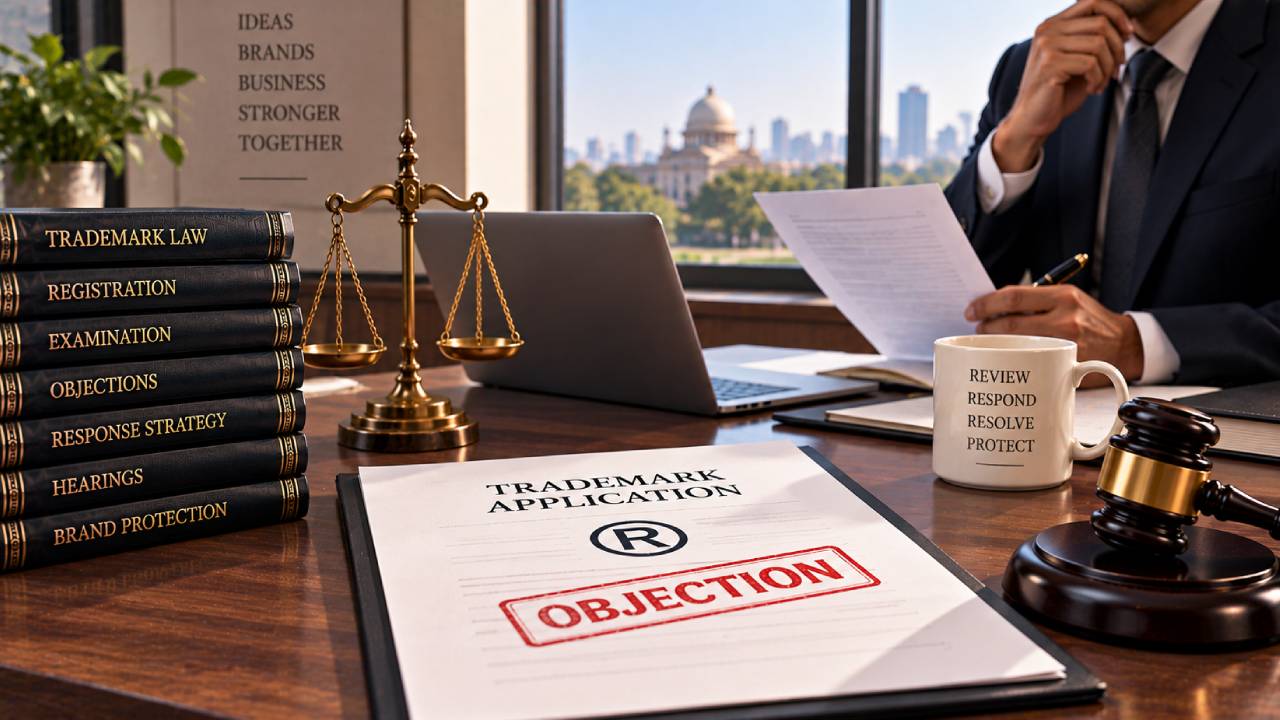
Receiving a trademark objection from the Indian Trade Marks Registry does not necessarily mean your brand cannot be registered. An objection usually means the Registrar has identified a legal or procedural concern during examination and wants the applicant to address it before the application can proceed. Under Rule 33 of the Trade Marks Rules, 2017, the Registry examines the application and may issue an examination report setting out objections to acceptance.
The important point is to act promptly. The examination report must be carefully reviewed, the applicable provisions identified, and a reasoned response prepared within the prescribed period. Ignoring the report can result in the application being treated as abandoned.
Trademark objection: What does it actually mean?
A trademark objection is raised by the Trade Marks Registry during examination of a trademark application. The examiner reviews the proposed mark against the requirements of the Trade Marks Act, 1999 and searches existing applications and registrations for potentially conflicting marks. The objection is normally communicated through an examination report. The report may refer to Section 9, Section 11 or other provisions of the Act. It may also raise procedural concerns concerning the application, specification of goods or services, classification, documents or the manner in which the mark has been presented.
An examination objection is different from an opposition. An objection comes from the Registry during examination. An opposition is filed by a third party after the application is advertised in the Trade Marks Journal. These are separate stages and require different responses. The official IP India trademark filing process also distinguishes examination, response to objections, hearing and subsequent publication.
Why do trademark applications receive objections?
The Trade Marks Act contains several grounds on which registration may be refused. The most common objections encountered during examination relate to distinctiveness and similarity with earlier marks. A mark may be objected to because it is considered descriptive, non distinctive or customary in the trade. Alternatively, the examiner may identify an earlier trademark and conclude there is a likelihood of confusion.
The precise wording of the examination report matters. A response should address the examiner’s actual reasoning rather than simply stating that the applicant believes the mark is unique. A strong response connects the facts, the statutory provision and the evidence. It should explain why the objection does not apply to the particular mark and goods or services involved.
What is a Section 9 trademark objection?
Section 9 deals with absolute grounds for refusal. Under Section 9(1)(a), a mark may be refused if it lacks distinctive character and cannot distinguish the goods or services of one person from those of another. Section 9(1)(b) addresses marks consisting exclusively of indications describing characteristics such as kind, quality, quantity, intended purpose, value, geographical origin or other characteristics of goods or services. Section 9(1)(c) covers marks that have become customary in the current language or established practices of the trade.
For example, a highly descriptive expression used directly to describe a product may have difficulty obtaining exclusive trademark protection. The more distinctive and inherently brand focused the expression is, the stronger the position may be. A Section 9 objection does not always end the matter. Section 9(1) contains an important qualification where a mark has acquired distinctive character through use or is a well known trademark. Evidence of genuine commercial use can therefore become highly relevant in an appropriate case.
What is a Section 11 trademark objection?
Section 11 deals primarily with relative grounds for refusal. The issue is usually an earlier trademark. Section 11(1) applies where the applied mark is identical to an earlier mark and the goods or services are identical, or where the marks are similar and the goods or services are identical or similar, creating a likelihood of confusion or association among the public.
The examiner may therefore cite one or more earlier applications or registrations in the examination report. The existence of an earlier mark does not automatically mean the later application must fail. The assessment requires consideration of the marks, the relevant goods or services and the likelihood of confusion. The factual circumstances surrounding the cited mark can also matter. This is why simply comparing two names visually is often insufficient.
How should you read the examination report?
The first step is to identify every objection and the provision cited against the application. Read the examiner’s reasoning carefully. If Section 9 is cited, determine whether the concern relates to lack of distinctiveness, descriptiveness or customary use. If Section 11 is cited, identify the cited application or registration numbers and examine the corresponding marks, proprietors, classes, specifications and status.
Do not assume every cited mark is currently active or relevant. A cited application may have been abandoned, cancelled or restricted. The cited goods or services may also differ materially from those covered by the new application. In other cases, the earlier mark may be strong and directly relevant, requiring a more carefully structured response. The current IP India system allows applicants to track application status and examination or objection status online.
How much time do you have to reply to a trademark objection?
Under Rule 33(4) of the Trade Marks Rules, 2017, if the applicant fails to respond to the examination report within one month from receipt, the Registrar may treat the application as abandoned. Rule 33 also provides for further examination of the response and a hearing where appropriate. The deadline should therefore be treated seriously.
Applicants should check the official record and examination report rather than relying only on an email notification. The precise procedural position should be verified from the current Registry record and applicable rules before action is taken. A missed deadline can place the application at risk even where the underlying trademark may have been capable of registration.
What should a trademark objection reply contain?
A reply should be tailored to the objections raised against the particular application. The response normally identifies the application, reproduces or addresses each objection, explains the applicant’s position and provides supporting legal and factual submissions. Where evidence is relevant, it should be filed in the appropriate form and properly connected to the arguments being made.
For a Section 9 objection, the response may explain why the mark is inherently distinctive, suggest why the mark does not exclusively describe the relevant goods or services, or establish acquired distinctiveness through use where the facts support such a case. For a Section 11 objection, the response may analyse differences between the competing marks, differences in goods or services, trade channels, consumer base and the overall likelihood of confusion. A generic statement such as “the marks are different” is rarely enough. The Registry needs a reasoned explanation supported by the facts and applicable law.
What evidence can help overcome a trademark objection?
Evidence is particularly important where the applicant relies on prior use or acquired distinctiveness. Depending on the circumstances, useful evidence can include invoices, sales records, advertising material, packaging, catalogues, website records, social media material, distribution documents, purchase orders and other contemporaneous business records.
The evidence should establish more than mere existence of a brand. It should help demonstrate the extent, duration and commercial context of use. For a mark that has been used extensively before filing, the applicant may have a stronger factual basis for arguing acquired distinctiveness. The evidence must nevertheless be credible, consistent and relevant to the mark and goods or services covered by the application. Applicants should avoid filing large quantities of unrelated documents. A smaller, well organised evidentiary record can be more persuasive than a collection of documents without a clear connection to the legal argument.
What if the objection is based on an earlier trademark?
This is one of the most important situations requiring detailed analysis. Begin by checking the cited mark’s current status. Then compare the marks as a whole. Consider their visual, phonetic and conceptual similarities. The goods or services should also be compared rather than looking only at the class number. Two businesses can sometimes operate under similar marks where their goods, services, consumers and commercial circumstances are sufficiently different. Conversely, marks can create a likelihood of confusion even where they are not identical.
The Trade Marks Act focuses on likelihood of confusion in the circumstances described by Section 11. The Registry’s examination practice also searches earlier trademarks for identical or deceptively similar marks covering the same or similar goods or services. The response should therefore present a structured comparison instead of relying on a simple assertion of dissimilarity.
Can consent from the owner of an earlier trademark solve the objection?
Consent may be relevant in some cases, but it should not be treated as an automatic solution to every objection. The legal effect of consent depends on the nature of the objection and the surrounding circumstances. Section 11 also contains specific provisions concerning earlier marks, well known marks and other grounds.
Before obtaining or relying on a consent or coexistence arrangement, the applicant should assess whether it actually addresses the Registry’s concern and whether the agreement itself creates additional commercial or legal obligations. A poorly drafted coexistence arrangement can create future problems. Any agreement should therefore be considered alongside the trademark applications, registrations and actual business activities of both parties.
What happens if the Registry is not satisfied with the reply?
If the response does not overcome the objections, the Registrar may provide an opportunity for a hearing. Rule 33(6) states that where the response is not satisfactory or the applicant has requested a hearing, the Registrar shall provide an opportunity of hearing. After the response or hearing, the Registrar is required to pass an appropriate order.
The hearing is therefore not merely a formality. The applicant should understand the objections, identify the strongest legal submissions and be prepared to answer questions concerning the mark, use, cited marks and goods or services. A well prepared hearing strategy can be particularly important where the written reply has not fully resolved the examiner’s concerns.
What happens after a trademark hearing?
After considering the response and submissions made at the hearing, the Registrar may accept the application, accept it subject to conditions or limitations, or refuse it. The Registry’s public records contain examples where objections under Sections 9 and 11 were maintained after a response and hearing because the Registrar concluded the mark remained descriptive or deceptively similar to earlier marks.
This illustrates why the initial reply matters. The hearing stage should not be approached as an opportunity to introduce an entirely different case without considering the material already filed.
What if the trademark application is refused?
A refusal does not necessarily mean every avenue has ended. The applicant should first obtain and review the written order. The reasons for refusal determine the next procedural step. Depending on the circumstances and current statutory framework, the applicant may have a route to challenge the decision before the appropriate forum.
Rule 36 of the Trade Marks Rules, 2017 also provides a mechanism concerning the Registrar’s decision, including a process for requesting a written statement of grounds and materials used in reaching the decision where an appeal is contemplated. Because limitation periods and appellate procedures are procedural matters, an applicant should obtain advice promptly after receiving a refusal rather than assuming the deadline can be dealt with later.
What if the trademark application is abandoned?
Abandonment can occur when the applicant fails to respond to an examination report within the prescribed period. Rule 33(4) expressly permits the Registrar to treat an application as abandoned where no response is received within one month of receipt of the examination report.
An applicant should not simply file a fresh trademark application without first understanding why the original application was abandoned. A new filing may face the same substantive objection and can also affect filing priority and the overall protection strategy. Where an application has been abandoned, the available remedies and prospects depend on the procedural history and applicable law. Urgent legal review is advisable.
Should you amend the trademark application?
An amendment can sometimes be useful, but it should not be made casually. The Trade Marks Rules permit correction or amendment of an application before registration, subject to restrictions. Rule 37 states that an amendment cannot substantially alter the trademark applied for or substitute a new specification of goods or services not included in the original application.
For example, narrowing an overly broad specification may sometimes reduce the scope of a conflict. However, changing the essential character of the mark can create a different problem. Any amendment should therefore be assessed against the original filing, the cited marks and the applicant’s long term brand strategy.
Can you withdraw and file a new trademark application?
Sometimes a fresh application may be commercially sensible. It is not automatically the best solution. A new application creates a new filing date and may lose advantages associated with the original application. It may also face the same cited marks if the underlying conflict remains. Before abandoning an existing application, the applicant should compare the prospects of responding, amending the specification, pursuing a hearing, challenging a refusal or filing a new mark. The decision should be based on both legal strength and commercial importance.
When should you seek professional trademark advice?
Professional advice becomes particularly valuable when the objection involves Section 11 conflicts, substantial evidence of prior use, multiple cited marks, well known trademarks, complex goods or services, or a potentially valuable brand. The quality of the response can influence whether the matter is resolved at examination or proceeds to a hearing and potentially further proceedings. Businesses should therefore consider obtaining advice from the best trademark lawyers where the brand has significant commercial value or the objection raises a substantial legal issue. A specialist can assess the Registry’s reasoning, review the cited marks, identify weaknesses in the objection and determine what evidence may materially improve the application’s position.
Common mistakes after receiving a trademark objection
One of the most common mistakes is missing the response deadline. Another is submitting a generic response without addressing each objection separately. Applicants may also focus exclusively on the visual appearance of their mark while ignoring the goods and services, trade channels and consumer context. Some applicants file extensive evidence without explaining why it proves distinctiveness. Others assume a trademark objection means the mark has already been rejected and stop taking action. These mistakes can turn a manageable examination issue into a more difficult proceeding. The safest approach is to treat the examination report as a legal document requiring a specific response.
How businesses can reduce the risk of future trademark objections
Trademark strategy should begin before filing. A comprehensive search can identify identical and similar marks across relevant classes. The proposed specification should accurately reflect the business while avoiding unnecessarily broad descriptions. Businesses should also consider whether the proposed mark is inherently distinctive, whether it relies on descriptive language and whether third party rights may create a conflict. For growing businesses, an early trademark audit can be valuable. Reviewing existing applications, registrations, brand variations and new products helps prevent situations where a business invests heavily in a brand before discovering an avoidable registration problem. Intellectual property lawyers for businesses can also help integrate trademark protection into wider commercial and brand strategy, particularly where the business operates across several product categories or jurisdictions.
Conclusion
A trademark objection is a stage in the registration process, not necessarily the end of it. The most important step is to identify precisely why the Registry has objected and respond within the prescribed period. A successful response is usually built around three elements: a clear understanding of the statutory objection, a focused legal argument and reliable evidence where the facts require it. Section 9 and Section 11 objections require different strategies. A descriptiveness objection calls for a different analysis from a conflict with an earlier trademark. Similarly, an application supported by substantial prior use may require a different evidentiary approach from a newly created brand.
The applicant should therefore avoid generic replies and rushed decisions. A careful examination of the report, cited marks, goods and services, evidence and procedural deadlines gives the application the strongest opportunity to move forward. The information in this article is intended for general educational purposes. Trademark law and Registry procedures can change, and the appropriate response depends on the wording of the examination report and facts of the individual application. The current Trade Marks Act, Trade Marks Rules and official Registry record should be checked before taking action.