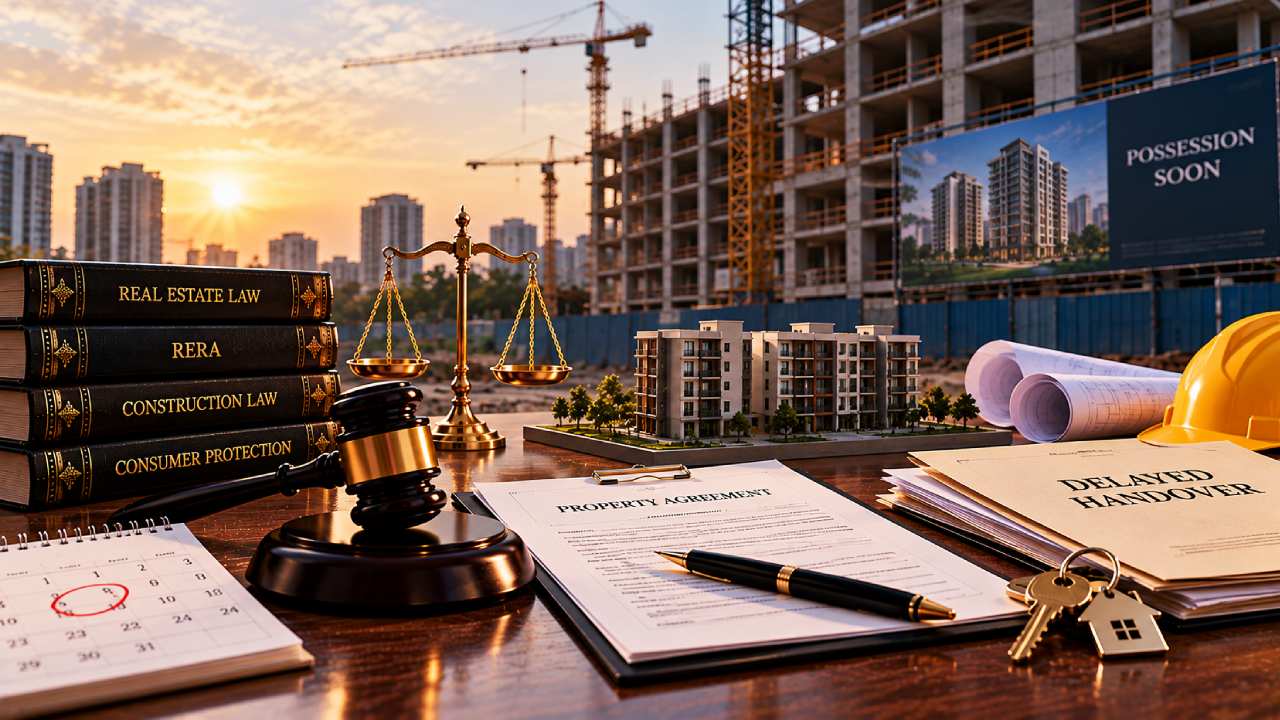

A delay in property registration can leave homebuyers in a difficult position, even after they have paid the full purchase price. The problem becomes more serious when a builder has unpaid dues to a development authority, government department or other public body. Buyers may have possession of their flats but remain unable to obtain registered ownership documents.
Homebuyers can seek legal directions to complete registration in appropriate cases. The outcome depends on the sale agreement, the nature of the outstanding dues, the development authority’s statutory powers and any restrictions affecting the property. The builder’s financial default does not automatically justify every refusal to register, but buyers must establish their rights under the applicable legal framework.Why do builders delay property registration?
Property registration may be delayed because a developer has not paid land premiums, lease rent, additional development charges, interest, penalties or other amounts owed to a development authority.In some projects, the builder has collected money from buyers for statutory payments but has failed to deposit it with the relevant authority. Other disputes concern land leases, incomplete development obligations, missing completion certificates or restrictions on transferring the property. These situations create a conflict between two interests. The authority seeks to recover public dues, while buyers seek the ownership documents promised under their agreements. The buyer’s position becomes stronger when the agreed consideration has been paid, the property is ready for lawful transfer and the outstanding liability arises from the developer’s independent default. However, the legal position still depends on the applicable statute and the terms governing the land.What does RERA say about property registration?
The Real Estate (Regulation and Development) Act, 2016 provides an important statutory basis for homebuyer rights. Section 17 requires the promoter to execute a registered conveyance deed in favour of the allottee and transfer the relevant title, including the applicable undivided share in common areas. It also addresses the handover of physical possession and project documents. The timing is governed by local laws and the statutory framework. Where no local law specifies the period, Section 17 provides for execution of the conveyance deed within three months from the occupancy certificate. This obligation is important because a buyer’s rights do not end with possession or payment. The developer must also complete the legal transfer of title in accordance with the law. RERA also places responsibilities on promoters concerning project information, contractual obligations and outstanding outgoings. A developer cannot assume its obligations disappear simply because the buyer has paid the purchase price. However, Section 17 does not automatically cancel every restriction imposed by a development authority. The buyer must still establish whether the authority has a valid legal basis for withholding the conveyance or registration.Can a development authority refuse registration because the builder owes money?
The answer depends on the governing statute, the lease conditions and the facts of the project. Some development authorities have statutory powers or contractual rights linked to unpaid land premiums, lease rent or other dues. Depending on the legal framework, those powers may affect transfer permissions or the issue of completion documents. Yet a refusal affecting buyers who have fulfilled their obligations may be open to challenge where the authority’s action is inconsistent with the governing law or a binding court order. The distinction between the builder’s liability and the buyer’s liability is crucial. A buyer should examine whether the authority is seeking payment from the buyer under a valid legal provision or is withholding registration solely because the developer has defaulted. The fact of outstanding dues alone does not resolve this question.What does the Amrapali judgment establish?
The Supreme Court’s decision in Bikram Chatterji v Union of India is a significant example of judicial protection for homebuyers affected by builder defaults. The case concerned serious failures by the Amrapali Group, including diversion of homebuyers’ funds and non payment of dues to the Noida and Greater Noida authorities. The Court directed the authorities to facilitate conveyance and completion steps for eligible homebuyers in the projects covered by its orders. It also directed recovery of specified dues from other attached assets rather than allowing the authorities to sell the homebuyers’ flats or recover those dues from the protected projects. The judgment demonstrates that courts can protect homebuyers where the facts and legal framework justify separating the buyers’ interests from a developer’s financial defaults. However, the decision arose from exceptional facts and detailed judicial supervision. It does not mean every builder’s outstanding dues must always be recovered from other assets, or that all development authorities must register every flat without considering their statutory powers. A buyer should use the judgment as an important legal precedent while assessing how closely the facts match the relevant project.What is the significance of the Ajnara Homes dispute?
The Ajnara Homes matter in Greater Noida West illustrates the continuing problem of delayed registration despite payment by buyers. In October 2026, the Allahabad High Court questioned why homebuyers who had paid in full remained unable to register their flats because of the developer’s unpaid government dues. The court sought a plan of action from the Uttar Pradesh government, Greater Noida Industrial Development Authority and UP RERA. The issue raises an important question: should buyers who have fulfilled their contractual obligations remain unable to obtain legal title because the developer has failed to meet its financial obligations to a public authority? The court’s intervention shows the importance of regulatory and judicial remedies. However, the final relief will depend on the directions made in the proceedings and the legal position governing the project. Homebuyers in other developments should therefore verify the latest orders before relying on the case as authority for a specific remedy.Can a homebuyer approach RERA to compel registration?
Potentially, yes. Where a promoter has failed to comply with its obligations under RERA or the agreement for sale, an allottee may consider a complaint before the relevant Real Estate Regulatory Authority. Section 17 is particularly relevant where the dispute concerns execution of the conveyance deed. The relief sought should be framed carefully. The buyer may seek a direction requiring the promoter to execute the conveyance, comply with outstanding contractual obligations or take the steps necessary to complete the transfer. However, RERA proceedings may not by themselves resolve every dispute between a developer and a development authority. If registration depends on a separate statutory approval, land lease issue or action by a public authority, additional proceedings may be necessary. The buyer should therefore identify each party whose action or omission prevents registration.Can homebuyers approach the High Court?
A writ petition may be appropriate in certain circumstances, particularly where a public authority’s action is challenged as unlawful, arbitrary or contrary to a statutory duty. The High Court can examine the legality of the authority’s decision and, where justified, issue directions within its jurisdiction. The availability of a writ remedy depends on the facts, the relief requested and the alternative remedies available. For example, buyers may argue the authority has improperly withheld a necessary document despite the buyers having met their own obligations. The authority may respond by relying on unpaid lease dues, statutory restrictions or incomplete compliance. The court must assess those competing positions under the relevant law. A writ petition is not an automatic route to registration, but it can be important where the dispute involves a public authority and a legal duty.Must buyers pay the builder’s outstanding government dues?
Not automatically. A buyer should first determine the legal basis of the demand. The amount may relate to the developer’s land premium, lease rent, penalties or other obligations. Alternatively, the sale agreement may expressly require the buyer to bear a specified charge. The distinction matters because contractual allocation of costs does not necessarily determine the authority’s statutory recovery rights. Equally, a public authority cannot always transfer a developer’s liability to buyers without a valid legal basis. The Amrapali judgment is an important example of the Supreme Court protecting buyers from specified authority dues in the circumstances of that case. It should not be interpreted as a universal exemption from all charges connected with a property. Before making any additional payment, buyers should request a written calculation, the legal provision relied upon and a clear explanation of why the amount is said to be payable by them.What if the builder collected money for government charges but did not pay it?
This can strengthen the buyer’s case against the developer. Where the agreement or payment schedule shows the buyer paid amounts intended to cover statutory charges, the buyer should preserve receipts and the developer’s demand letters. Bank statements and the account statement issued by the builder may also be relevant. The buyer can then seek an explanation from the developer and, where appropriate, pursue relief for breach of contract or failure to comply with statutory obligations. RERA may be relevant if the complaint concerns the promoter’s duties under the Act. Depending on the facts, consumer proceedings or civil remedies may also be considered. The buyer should distinguish between a charge properly payable by the buyer and money already collected by the developer for payment to the authority.Does possession mean the buyer owns the property?
Possession and registered title are related but distinct. A possession letter or physical occupation does not necessarily complete the legal transfer of ownership. The registered conveyance deed and the applicable land records remain important to establish and document the buyer’s title. This is why delayed registration can cause problems even where the buyer has lived in the flat for years. It may complicate resale, mortgage financing, inheritance administration and other transactions requiring proof of ownership. Homebuyers should therefore treat execution and registration of the conveyance deed as a separate milestone, rather than assuming possession alone resolves all legal formalities.What documents should buyers collect before taking legal action?
Buyers should assemble the allotment letter, agreement for sale, payment receipts, bank statements and any possession letter. They should also obtain the project’s RERA registration details and correspondence about registration delays. Where government dues are involved, buyers should seek the authority’s demand notices, account statements, lease conditions and any order or policy governing transfer of title. If the builder claims the buyer must pay additional amounts, the buyer should request an itemised calculation and the contractual or statutory basis for each charge. These documents help establish whether the buyer has fulfilled their obligations, whether the builder has breached the agreement and whether the authority’s refusal has a lawful basis.What practical steps should a buyer take when registration is delayed?
The first step is to request a written explanation from the builder and the relevant authority. A general statement about unpaid dues is insufficient for a proper legal assessment. The buyer should then verify the amount, nature and legal status of the outstanding dues. It is also useful to establish whether the property has the necessary occupancy or completion certificate and whether any restriction specifically prevents execution of the conveyance deed. The next step is to identify the appropriate remedy. Depending on the facts, this may involve a RERA complaint, a consumer proceeding, a civil claim or a writ petition. The correct route depends on who is responsible for the delay and what order is required to complete registration. Property registration lawyers can examine the sale documents, statutory provisions and authority correspondence to determine whether the buyer can seek a direction for registration without accepting liability for the developer’s independent defaults.Can an arbitration clause help resolve the dispute?
An arbitration clause may be relevant where the dispute concerns contractual obligations between the buyer and developer. Its effect depends on the wording of the agreement, the nature of the dispute and whether the relief sought can legally be decided through arbitration. However, arbitration does not automatically compel a development authority to act if the authority is not bound by the arbitration agreement. A dispute involving public law duties or statutory restrictions may require a different remedy. Where the dispute involves contractual claims over payments, obligations or losses arising from a failed transfer, construction arbitration lawyers may assess whether arbitration is available and suitable. The buyer should not assume an arbitration clause replaces RERA or other statutory remedies.Conclusion
Homebuyers can seek to compel property registration when a builder’s outstanding government dues have blocked the transfer of title, but success depends on the specific legal and factual position. Section 17 of RERA provides an important foundation for the buyer’s right to a registered conveyance deed. The Supreme Court’s Amrapali decision demonstrates how courts may protect homebuyers where a developer’s defaults should not defeat their rights. The recent Ajnara Homes proceedings show the issue remains active, particularly in developments where buyers have paid in full but registration remains stalled. The practical priority is to establish the buyer’s contractual compliance, identify the exact dues and determine whether the authority has a lawful basis for withholding registration. Buyers should obtain the relevant documents before deciding whether to approach RERA, a consumer forum, a civil court or the High Court. The central principle is not that every government demand must be ignored. It is that the rights and liabilities of homebuyers, developers and public authorities must be assessed separately under the applicable law. A developer’s default should not be treated as automatically determining a buyer’s legal position.Frequently Asked Questions (FAQs)
Can a builder refuse registration because it owes money to a development authority?
Depends on the governing law, lease conditions and nature of the dues. A refusal may be challengeable where the authority lacks a valid legal basis, but outstanding dues can affect registration where the applicable law permits it.
Can I force the builder to register my flat after paying the full amount?
You may seek legal directions if the builder has failed to execute the conveyance deed despite fulfilling the relevant obligations. The appropriate forum and remedy depend on the agreement, statutory requirements and role of the development authority.
Can a development authority recover the builder's dues from homebuyers?
Not automatically in every case. The authority must have a legal basis for recovery from the buyer or the property. The relevant statute, lease conditions, agreement and any binding court orders must be examined.
Can RERA order the builder to execute a conveyance deed?
RERA can address promoter obligations under the Act, including the statutory duty to execute a registered conveyance deed. Whether further proceedings against a development authority are required depends on the reason registration is blocked.
Can I sell my flat without a registered conveyance deed?
A sale may be difficult or legally problematic where the buyer does not hold the required title documents. The ability to transfer contractual or other rights depends on the transaction structure and applicable law. A buyer should not assume a possession letter is equivalent to registered ownership.
Does the Amrapali judgment apply to every builder with unpaid dues?
No. The Supreme Court's directions were based on the facts and circumstances of the Amrapali proceedings. Other buyers must examine the applicable law and the terms of any relevant court order.
What if the builder collected government charges but did not deposit them?
Payment records and the agreement can help establish the developer's obligations. Buyers may pursue appropriate statutory or contractual remedies, depending on the circumstances.